


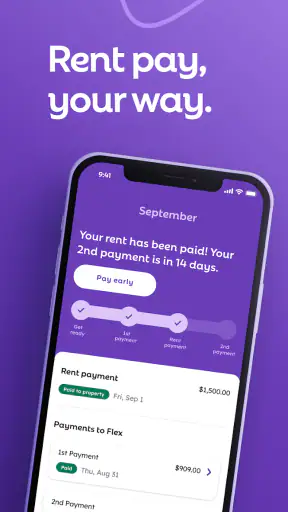
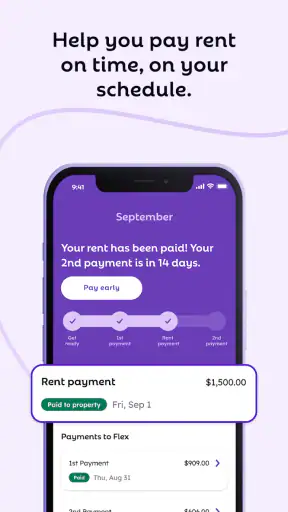
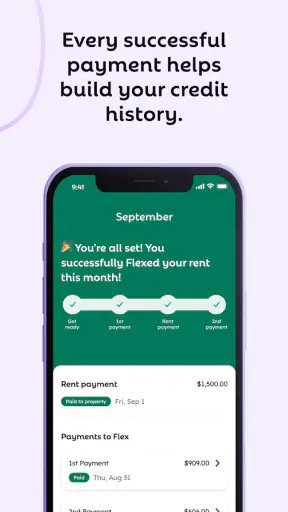

Paying rent is usually tied to one uncomfortable deadline: the day the full amount leaves your account. Flex - Rent On Your Schedule takes a different approach by focusing on the timing of that payment. I found the app most interesting not because it tries to replace a complete budgeting system, but because it is built around one specific problem: making rent easier to fit into the rhythm of your income.
That distinction matters. Flex is a finance app from Flexible Finance, Inc., and its central idea is reflected in its store summary, “Split rent anywhere you live.” In everyday use, the appeal is straightforward: instead of treating rent as one huge monthly event, the service is designed to give users more flexibility around when they handle it. For someone whose pay arrives on a schedule that does not line up neatly with rent day, that can change how the entire month feels.
I would not describe it as a general-purpose money manager. It is more focused than that, and that focus is its strength. The real question is not whether it can organize every part of your finances. The better question is whether adjusting the timing of rent would make your cash flow less stressful. If the answer is yes, this is the kind of app worth examining closely.
Changing the rent deadline into a cash-flow tool
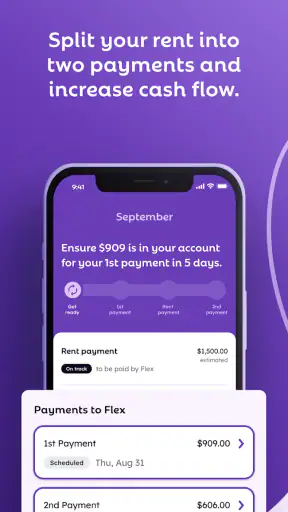
The most important capability here is the option to approach rent as a scheduled obligation rather than a single unavoidable withdrawal from your own monthly planning. That sounds like a small change, but it can be meaningful for people who are paid weekly, every other week, or on dates that fall awkwardly around the beginning of the month.
When rent consumes a large part of available cash at once, the problem is often timing rather than total income. A person may be able to cover the month comfortably, yet still feel squeezed because other bills, groceries, transportation, or unexpected expenses arrive before the next paycheck. Flex is aimed at that gap. It gives the rent payment a more flexible place in a personal cash-flow plan.
In my view, this is more useful than another app that simply displays a spending chart. A chart can show that rent is expensive, but it cannot change the pressure created by its due date. Flex is built around the practical side of the problem: how the obligation fits between paychecks.
There is also a psychological benefit. A single large payment can make the start of the month feel financially hostile, even when the household budget is technically healthy. Breaking the mental burden into smaller planned moments may make it easier to keep the rest of the month under control. That does not reduce what rent costs, of course, but it can make the timing easier to manage.
That is the capability I would pay attention to before anything else. If you are looking for bill negotiation, investment tools, credit education, or a full replacement for your bank’s budgeting features, this is probably too narrow. If your main frustration is the rent deadline itself, the narrow focus becomes much more relevant.
What the experience is really solving
Imagine being paid on alternating Fridays while rent is due near the beginning of the month. One paycheck may arrive just before rent, leaving very little room for food or other bills. The following paycheck then restores the balance, but the cycle repeats. Flex is designed for this kind of mismatch, where the calendar creates pressure even though income is reasonably predictable.
The practical value is not that the app magically makes rent cheaper. It is that the rent obligation can be considered alongside the dates when money actually arrives. That makes the service a cash-flow tool, not a discount tool. Anyone using it should keep that distinction clear, because flexibility can improve timing without improving affordability.
I also think this makes the app more suitable for people who already know their income pattern. If your pay is regular, you can make a realistic plan around it. If your income changes sharply from week to week, the same flexibility may require more discipline rather than less. A shifted obligation still needs to be covered.
The app is free to install, and it is rated for Everyone, which makes the first step approachable for a wide audience. Its current version is 3.59.0, and it supports devices running Android 7.0 or later. Those details are useful when deciding whether an older phone can handle it, especially if you keep a reliable device for banking and financial tasks rather than upgrading frequently.
How I would use it during a normal month
I would begin by treating the app as part of a rent routine, not as something to open only when money is already tight. The first step would be to understand the rent amount, the due date, and the dates when my income normally arrives. Then I would decide whether the flexibility actually improves the sequence of my month.
A sensible workflow is to look at the entire pay cycle before committing to a schedule. List the essentials that compete with rent: utilities, transport, food, insurance, and any debt payments. The point is not to push rent into a corner and hope the remaining money lasts. The point is to place the rent-related payments where they create the least strain.
This is one of the less obvious lessons of using a rent-timing app: a more frequent payment rhythm can feel easier while still requiring a calendar. I would use a recurring reminder in my phone and check the account before each planned payment. That small habit prevents the flexibility from becoming an excuse to stop watching the balance.
Another useful approach is to compare two months rather than judging the service after a few days. In the first month, the new timing may feel unfamiliar, and the household budget may still be arranged around the old rent date. By the second month, it becomes easier to see whether groceries, transportation, and other bills are genuinely easier to handle.
I would also keep a separate emergency buffer. Flex can help distribute the pressure of rent, but it should not be treated as a substitute for savings. If an unexpected expense arrives, the rent plan still needs to remain intact. The app works best when it is part of a stable plan, not when it is used to stretch money beyond what the household can actually afford.
A realistic example of where the difference appears
Consider a renter whose income arrives in two regular installments. Rent takes up a large share of the first installment, while the second installment must cover food, commuting, and household needs until the next cycle begins. Under a traditional arrangement, the first half of the month feels compressed and the second half feels more comfortable.
With a schedule designed around the renter’s cash flow, the pressure can be distributed more evenly. The renter still pays the same basic housing obligation, but the timing no longer dominates one particular week. That can make it easier to avoid relying on a credit card for ordinary expenses that occur immediately after rent is paid.
The important trade-off is that the renter must stay aware of the dates. A flexible schedule is not automatically a simpler schedule. It may create more payment events to remember, and that is a real weakness for anyone who tends to ignore notifications or keep an unreliable balance.
For this reason, I would recommend pairing the app with a simple calendar habit. Mark the rent-related dates beside payday and other major bills. This turns Flex from a passive promise of flexibility into an active cash-flow plan. In my experience, that is where the actual benefit comes from.
Where it differs from ordinary alternatives
The usual alternative is to pay rent directly through a landlord portal, bank transfer, check, or another standard payment method. Those options are often simpler because they involve one familiar transaction. They are also easier to understand: the money leaves your account on the established due date, and the process ends there.
Flex is more specialized. Its value comes from changing the timing experience, so it naturally introduces another layer between the renter and the normal rent process. That layer may be worthwhile for someone who repeatedly struggles with the calendar, but it can feel unnecessary for a person whose payday already lines up well with rent day.
A conventional budgeting app is another alternative, but it solves a different problem. Budgeting software can categorize spending, set targets, and show whether rent fits inside a broader plan. Flex is less about analyzing every purchase and more about making one major obligation fit the flow of income. I would use a budgeting app for visibility and Flex for rent timing if I needed both, rather than expecting one to replace the other.
A bank account with automatic transfers can also help some renters create their own rent schedule. That route offers direct control, but it requires the user to set up and maintain the system personally. Flex is more appealing when the renter wants a service centered specifically on rent rather than building a manual process from scratch.
The right comparison, then, is not “Which app has more features?” It is “Do I need a dedicated rent-timing solution, or can a normal transfer and a basic budget handle this?” If the ordinary method already works, adding another service may only add complexity.
The friction I would consider before relying on it
The first limitation is conceptual: flexibility does not lower the underlying housing cost. Rent remains rent, and the user still needs enough income to meet the obligation. Someone facing a permanent affordability problem may gain temporary breathing room but not a lasting solution.
The second limitation is attention. Splitting or rescheduling a major bill can make the month feel smoother, but it can also make the payment pattern less visible. With one traditional payment, the event is hard to miss. With a more flexible arrangement, the user must take responsibility for tracking the schedule.
There is also a learning curve whenever a familiar bill is handled differently. I would expect the first cycle to require more checking than usual, especially for anyone who shares rent with a roommate or coordinates several household expenses. The service is most comfortable when everyone involved understands the arrangement and the timing.
I would be cautious about using it during an unstable income period. If pay dates change often, or if a large portion of earnings comes from unpredictable work, a flexible rent schedule can become another obligation to juggle. In that situation, a direct conversation with the landlord, a larger emergency fund, or a broader financial counseling approach may be more appropriate.
Privacy and account security should also be treated seriously with any finance app. I would use a strong device lock, keep the operating system updated, and review every screen carefully before confirming a financial action. Convenience is useful, but it should never replace basic caution when housing payments are involved.
Finally, I would not install it simply because it is popular. Flex has more than a million installs, with an average rating of 4.7 from around one hundred twenty-three thousand ratings and roughly twenty-six thousand written reviews. That level of adoption suggests that many people find the concept useful, but popularity cannot determine whether the timing fits your income or whether you will actually keep up with the schedule.
Who gets the most value from the app
The strongest audience is renters with predictable income and an awkward relationship between payday and rent day. That includes people paid every other week, households that experience a tight first week of the month, and renters who can cover rent over the month but dislike losing most of their available cash all at once.
It may also help someone who has recently moved from a weekly-pay job to a different pay cycle and has not yet rebuilt a comfortable bill routine. In that case, the app can serve as a bridge while the person learns how the new income schedule affects housing and everyday spending.
Roommates may find the concept useful when their paydays differ, although coordination becomes important. One person’s convenient schedule should not create confusion for the other people responsible for the household payment. I would agree on the plan before changing the normal routine and keep a shared record of what is expected.
The people who should probably skip it are renters who already pay rent comfortably through a standard bank transfer, anyone who wants a complete financial dashboard, and users whose income is too irregular to support a dependable schedule. It is also not the first tool I would choose for someone in a serious debt crisis, because adjusting rent timing cannot address every financial pressure at once.
My overall impression is that Flex has a clear purpose and is strongest when judged on that purpose. It does not need to become a huge finance platform to be useful. Its advantage is the attempt to make rent fit around real paydays instead of forcing every renter to organize the month around one date.
For me, the deciding test would be simple: look at the last few months and ask whether the rent deadline repeatedly caused a temporary cash shortage. If it did, this app is worth trying as a focused solution. If it did not, the traditional payment method may remain cleaner. The best reason to use Flex is not to spend more, but to make an unavoidable payment easier to place in a realistic monthly plan.


